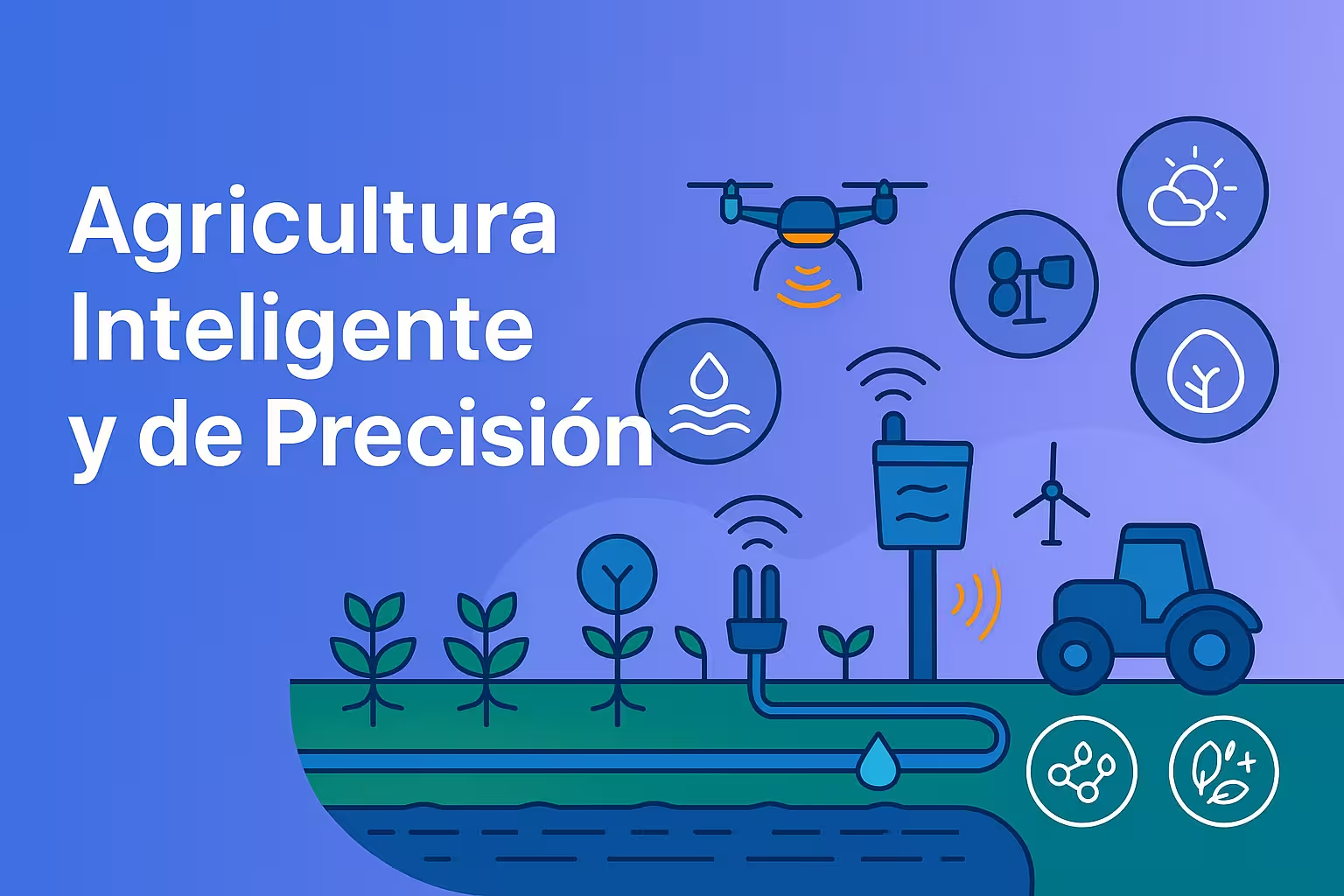
Smart and Precision Agriculture: Benefits of Sensorization and Monitoring in Chile
How IoT-MONITOR's IoT solutions transform Chilean agriculture through sensorization, real-time monitoring, and intelligent resource management to optimize yields and sustainability.

Co-Founder AHORRO ENERGÍA & IoT-MONITOR
What is Smart and Precision Agriculture?
Precision agriculture uses IoT technologies to monitor and manage crops with maximum efficiency. Through sensors, drones, and data platforms, farmers can make decisions based on precise information about soil, climate, water, and crop conditions in real time.
The precision agriculture market is experiencing a compound annual growth rate (CAGR) of 12.8% between 2022 and 2030, driven primarily by the rise of the Internet of Things and the adoption of advanced analytics systems by farmers. In Chile, where agriculture faces critical challenges of water scarcity, climate variability, and the need for greater productivity, IoT-MONITOR solutions enable optimization of every resource and maximize crop yields.
5 Ways Precision Agriculture Boosts Your Business
Precision agriculture transforms traditional agricultural management through IoT technologies that process large volumes of information to improve crop performance. IoT-MONITOR offers solutions that generate concrete and measurable benefits for your agricultural operation.
1. Better Predictability: One of the main concerns of agricultural businesses is not knowing when they might be affected by phenomena that harm crop quality. Data obtained through precision agriculture and easy access to real-time information through digital connections significantly reduce uncertainty in decision-making.
2. Resource Optimization: Given water resource scarcity in Chile due to climate change, it is essential to optimize water use on farms. Precision agriculture facilitates proper water use in irrigation tasks, avoiding high levels of waste. Permanent monitoring and availability of historical data serve as a guide to plan and manage crops more efficiently.
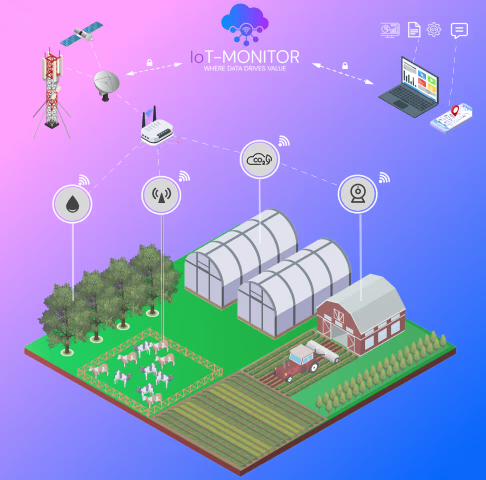
3. Communication Fluidity: Control of different variables through devices such as drones, sensors, smartphones, GPS, and satellites facilitates information flow through reports, SMS, and real-time alerts. This enables agile and efficient decisions to improve crop performance and respond effectively to emergency situations.
4. Higher Quality Products: The application of precision agriculture enables production of higher quality products that are more nutritious for human consumption and more sustainable for the planet by optimizing production processes. This represents a valuable alternative for consumers seeking to know the traceability of their food.
5. Environmental Commitment: Precision agriculture contributes to environmental care by promoting cleaner, more efficient, and nature-friendly operations. For example, the use of advanced technological systems enables participation in international initiatives such as the Global Methane Pledge, which aims to limit methane emissions by 30% compared to 2020 levels by 2030.
Soil and Water Monitoring for Smart Irrigation
One of the greatest benefits of IoT in agriculture is irrigation optimization. Soil moisture and matric potential sensors indicate exactly when and how much to irrigate, avoiding water waste and ensuring crops receive the optimal amount of moisture.
IoT-MONITOR integrates soil sensors with agrometeorological data to create smart irrigation systems that automatically adjust based on actual conditions. The platform allows configuring personalized alerts, accessing historical data on flow, volume, water table level, and electrical consumption measurements, facilitating irrigation decision-making based on precise data. This can reduce water consumption by up to 30-50%, while improving crop health and increasing yields.
Agrometeorological Monitoring and Decision-Making
IoT weather stations monitor critical climate variables: temperature, relative humidity, wind speed and direction, solar radiation, precipitation, and evapotranspiration. This information enables prediction of adverse conditions, optimization of fertilizer and pesticide applications, and planning of agricultural activities.
IoT-MONITOR's platform processes this data in real time and generates personalized alerts for frost, drought, excess moisture, or ideal conditions for pests. Farmers can take preventive actions before problems affect crops.
Regulatory Compliance and Water Extraction Monitoring
In Chile, the General Water Directorate (DGA) requires monitoring and reporting of effective extraction of groundwater and surface water according to Resolutions N° 1238 and N° 53. IoT solutions facilitate this compliance through automatic measurement of flow, volume, water table level, and water height.
IoT-MONITOR offers complete systems that include measurement equipment, dataloggers, visualization platform, and direct integration with DGA systems. This ensures accurate and timely reports, avoiding fines and ensuring continuous regulatory compliance.
Water and Soil Quality Monitoring
IoT sensors measure water quality parameters such as pH, electrical conductivity (EC), turbidity, and temperature. For soil, moisture, matric potential, EC, and temperature are monitored. This information is crucial for maintaining optimal growth conditions and detecting problems early.
With IoT-MONITOR, farmers can visualize all these variables in intuitive dashboards, receive alerts when values deviate from optimal ranges, and maintain historical records for trend analysis and future crop planning.
Connectivity in Rural and Remote Areas
One of the challenges of IoT agriculture in Chile is connectivity in rural and remote areas. IoT-MONITOR uses technologies such as NB-IoT, 4G, 3G, and even satellite connectivity when necessary, ensuring data is transmitted reliably from any location.
Our solutions are designed to operate with low energy consumption, allowing sensors to function for long periods with batteries or solar power, ideal for farms without access to electrical grid.
Data Analytics and Crop Optimization
Beyond basic monitoring, IoT-MONITOR offers advanced analytics that identify patterns, correlations, and optimization opportunities. Analysis of historical data enables yield prediction, optimization of planting and harvest schedules, and improved long-term resource management.
Farmers can compare performance across different farm zones, identify problem areas, and apply specific strategies for each sector. This precision leads to higher yields, better product quality, and greater profitability.
Smart Agriculture Use Cases in Chile
In Chile, smart agriculture is applied to various crops: fruits, vegetables, vineyards, grains, and extensive crops. IoT systems help manage everything from small family orchards to large commercial plantations, adapting to the specific needs of each crop type and region.
IoT-MONITOR has implemented solutions in different agricultural zones of Chile, from the arid north to the rainy south, demonstrating the versatility and effectiveness of IoT technologies for improving agricultural productivity and sustainability.
Why Choose IoT-MONITOR for Smart Agriculture
IoT-MONITOR specializes in IoT solutions for agriculture in Chile, combining robust hardware, intuitive software platforms, and local expertise. We offer end-to-end solutions that include consulting, design, installation, maintenance, and continuous support.
Our approach considers Chilean regulations, local climate conditions, and the specific needs of farmers. We work with technical and agronomic teams to ensure solutions generate real, measurable value from day one.
Conclusion: The Future of Agriculture with IoT
Smart and precision agriculture represents the future of agricultural production in Chile. Through IoT sensorization, real-time monitoring, and data analytics, farmers can optimize resources, increase yields, and improve the sustainability of their operations.
IoT-MONITOR is committed to the digital transformation of Chile's agricultural sector. Contact us to evaluate how we can optimize your agricultural operation with IoT.