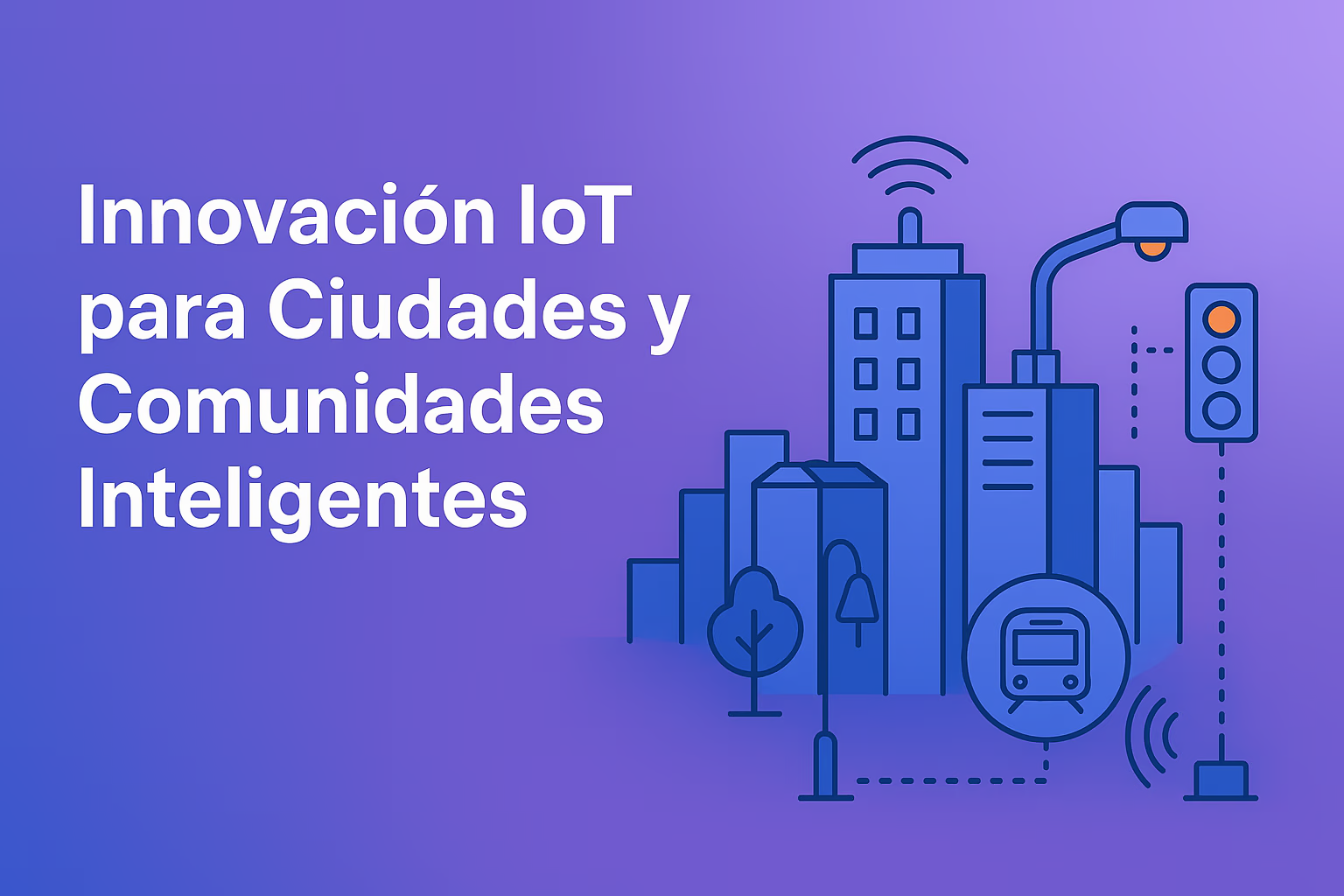
IoT Innovation for Smart Cities and Communities
How IoT-MONITOR's IoT solutions transform urban management, optimize energy efficiency, and improve quality of life in smart cities and communities in Chile.

Co-Founder AHORRO ENERGÍA & IoT-MONITOR
What are Smart Cities and Communities?
Smart cities and communities use IoT technologies to connect infrastructure, public services, and urban systems into an integrated network. This connectivity enables efficient resource management, improved quality of life for residents, and reduced environmental impact.
In Chile, the transformation toward smart cities is gaining momentum. IoT-MONITOR offers solutions that integrate sensors, data platforms, and control systems to optimize everything from public lighting to waste management and environmental monitoring.
The role of IoT in urban transformation
IoT acts as the nervous system of a smart city, connecting devices and sensors that collect real-time data on traffic, air quality, energy consumption, security, and more. This information is processed and analyzed to make automated decisions that improve operational efficiency.
With IoT-MONITOR, municipalities and communities can deploy sensor networks that monitor multiple variables simultaneously: noise levels, temperature, humidity, vehicle presence, space occupancy, and public service consumption. This comprehensive visibility enables resource optimization and proactive responses to urban needs.
Energy efficiency and sustainability with IoT
One of the greatest benefits of IoT in smart cities is energy consumption optimization. Buildings account for approximately 40% of global energy consumption. IoT-MONITOR solutions can reduce this consumption by up to 30% through automation of HVAC, lighting, and energy management systems.
IoT sensors monitor energy use in real time, detect inefficiencies, and automatically adjust systems based on occupancy, environmental conditions, and usage patterns. This not only reduces operational costs but also decreases carbon footprint and supports municipal sustainability goals.
Smart building and public space management
Smart buildings use IoT to automate HVAC, lighting, security, and maintenance systems. Sensors detect occupancy, temperature, air quality, and environmental conditions, automatically adjusting systems to maintain optimal conditions while minimizing energy waste.
IoT-MONITOR integrates these systems into a unified platform that allows administrators to visualize the status of multiple buildings, receive predictive maintenance alerts, and optimize operations from a centralized dashboard. This capability is especially valuable for municipalities managing multiple public facilities.
Environmental monitoring and quality of life
IoT enables continuous monitoring of air quality, noise levels, temperature, and other environmental indicators across different city zones. This information is used to identify areas with pollution problems, plan interventions, and communicate conditions to citizens in real time.
With IoT-MONITOR solutions, municipalities can deploy networks of environmental sensors that provide accurate, up-to-date data. This facilitates evidence-based decision-making for environmental policies and enables alerting the population when necessary, improving public health and urban quality of life.
Data analytics and intelligent decision-making
The volume of data generated by IoT sensors in a smart city is massive. The key is transforming this data into actionable insights. IoT-MONITOR uses advanced analytics and machine learning to identify patterns, predict trends, and recommend optimized actions.
For example, traffic data analysis can optimize traffic light synchronization, reduce congestion, and improve vehicle flow. Energy consumption analysis can identify inefficient buildings and prioritize improvements. These capabilities enable cities to operate more intelligently and efficiently.
Challenges in implementing IoT for smart cities
Implementing IoT solutions at urban scale presents technical and operational challenges. Integration with legacy systems, cybersecurity, interoperability between different technologies, and managing large data volumes require specialized expertise.
IoT-MONITOR addresses these challenges with open architectures, secure protocols, and scalable platforms designed for urban environments. Our approach enables gradual implementations, starting with pilot projects that demonstrate value before scaling to the entire city.
IoT use cases in Chilean smart cities
In Chile, IoT applications for smart cities include air quality monitoring in urban areas, intelligent public lighting management, waste collection route optimization, critical infrastructure monitoring, and early warning systems for emergencies.
IoT-MONITOR has worked with Chilean municipalities to implement solutions that improve operational efficiency and quality of public services. These projects demonstrate how IoT technology can generate tangible benefits for communities, from cost reduction to improved quality of life.
The future of smart cities with IoT
By 2030, it is projected that 50% of buildings in smart cities will use AI-powered IoT systems. This evolution will combine IoT with predictive analytics, advanced automation, and autonomous decision-making to create more efficient and sustainable urban environments.
IoT-MONITOR is prepared to accompany Chilean cities in this transformation, offering solutions that evolve with urban needs and leverage the latest innovations in IoT, AI, and data analytics.
Why choose IoT-MONITOR for smart city projects
IoT-MONITOR specializes in designing and implementing IoT solutions for smart cities and communities in Chile. We combine robust hardware, scalable software platforms, and local expertise to deliver projects that generate measurable value from day one.
Our approach includes strategic consulting, architecture design, technical implementation, and continuous support. We work closely with municipal teams to ensure solutions adapt to each community's specific needs and generate sustainable long-term results.
Conclusion: IoT as a driver of urban innovation
IoT solutions are transforming how cities and communities are managed, improving operational efficiency, sustainability, and quality of life for residents. The integration of sensors, data platforms, and intelligent control systems enables resource optimization, cost reduction, and data-driven decision-making.
IoT-MONITOR helps Chilean municipalities and communities implement these technologies gradually and effectively. Contact us to evaluate your smart city project.